Tuesday – February 17, 2026 – Pago Pago
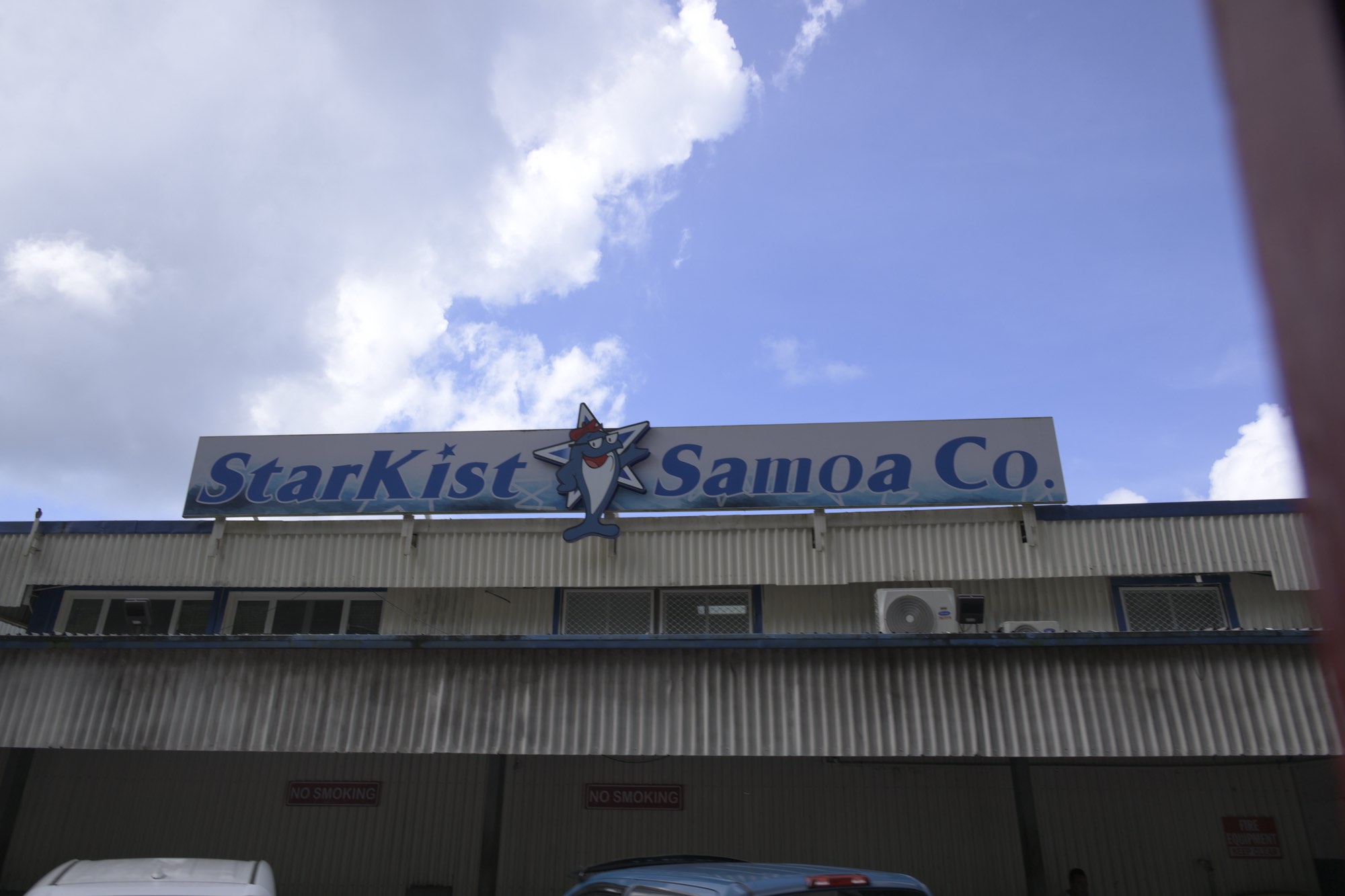
Who isn’t familiar with Charlie the tuna from the advertising for Star-Kist tuna? Well, we drove past the cannery on American Samoa twice – once on the way out and once on the way back. And both times it smelled really bad! Today’s featured photo is of the sign above the main office at the plant. This plant is actually very important to the financial strength of American Samoa as it generates a large portion of the revenue for the island.
I had no conception of what it would be like to visit American Samoa, but I thought it might be like a reminder of life back in the continental USA. I was wrong – the only thing that reminded me of home was driving on the right-hand side of the road. In all other respects this culture is Polynesian. It is our only port to date that provided both a welcome and a good-bye for us – welcome in the form of dancers and good-bye in the form of well-wishing and prayers as we left the Pago Pago harbor.
The excursion today was intended to give us an idea of some of the attractions on the island and the way of life of the inhabitants. Our transport was an unusual bus – one constructed by the bus company rather than an outside provider. The seats of the bus were wooden with no cushions. The interior was painted in bright colors – red and yellow. The windows were made of plexiglass and opened by dropping down into the side of the bus. The ride was not comfortable. Our guide for the day was Diecy – when not working as a guide she stays at home.
First stop was at an open-air market with primarily agricultural products. I didn’t get off for this stop because we have plenty of fruit in our cabin. I think others were expecting to find souvenirs at the market but that was not the case. Leaving the market, we began our journey on the only road on the island. Diecy said that if you get lost on American Samoa, all you need to do is face the opposite direction you are walking, begin walking again and you will return to Pago Pago.
We traveled around the North end of the harbor and passed a large processing plant owned by Starkist. You could tell there were fish in the area by the strong odor. We were told that the water near the plant is a gathering area for sharks who are drawn to that smell. We didn’t go for a swim to confirm that information. (Actually, we didn’t want to stay in the vicinity any longer than absolutely necessary because it was a very strong fish smell.)
Stop number 2 was a well-recognized rock formation called Camel Rock. I didn’t hear Diecy announce the stop and had to ask Jan and Kelsey why we were stopping. I can see a vague resemblance to a resting camel but wasn’t all that impressed.
As we traveled East, we passed Two Dollar Beach. Actually, it should be named Five Dollar Beach because that is the admission price now. They made improvements to the area and raised the admission fee to cover those costs. All along the road we saw beaches and I’m sure each has a name but they don’t post signs for all of them.
Down the road we stopped at a small beach where you could look at the Pacific or at a church opposite the parking lot. I chose the church and went inside. There were several things written in Samoan inside the church. I included a couple photos. After exiting the church, I asked one of the excursion guides what was written. The guide was surprised I went inside the church. She said that people were not to enter unless they went to pray and they don’t take phones or cameras with them. Ooops!
Back in the bus we headed back in the direction from which we had just traveled. We stopped at an unnamed beach with a tent set on the grass. At the tent a Samoan man sold drinks either from bottles, cans or coconuts (with a straw in a hole cut in the top). There was time for us to enjoy the water if we wanted (we chose to relax in the shade with a cooling breeze). The man explained tattoos given to men and women. I can’t remember all the details of the whys and wherefores, but if you are interested in obtaining a tattoo, here is guidance from the Samoan ministry of health.
There were several buses on the same tour – but with different languages in each bus. Each bus had a native guide. Following the tattooing discussion, the guides performed dances that resembled the hula (without the grass skirts, etc.). You’ll find a few photos in the gallery of the dancing.
Our final stop of the excursion was a grocery store. Grocery store? That is correct. Here the grocery store is more like a Super Wal-Mart – everything from soup to nuts (but not nut crackers). We went to look at the souvenirs available but didn’t find anything to our liking. I did, however, find an interesting license plate on a Hummer 3 in the grocery store parking lot. Looked to me like the owner has the same issue as many Iowans – where to put the renewal sticker for the license plate!
When we returned to the ship we thought we would walk around to do some shopping. The sun, however, changed our minds. After walking for 20 minutes or so we decided to return to the ship. It was just too hot!
I haven’t been including videos this year as they take a long time to edit and upload and consume the storage space for the website. I have included a time-lapse of our departure from the port. One of the things I missed was 5 long boats with around 15 rowers that are used to race those from other islands. As we were sailing away from Pago Pago, all of a sudden, the boats were skimming by Magnifica below our balcony and were out of sight before I could get my camera.
Tonight, we had a special treat that Sonja had told us about on Monday – bomboloni. There are a couple photos of the bomboloni buffet in today’s gallery.
Here you can view photos from today’s visit to Pago Pago.
Leave a Reply